‘Nurbanu, that person full of purity,
Resolved towards doing charity,
Built this gracious house of worship,
How charming! Most beautiful and exquisite!
It is an imperial monument, this distinguished work of charity,
Completed in the year “Excellent, Sublime Paradice.1
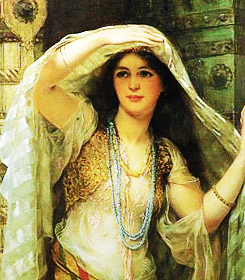
An inscription located on full display at the entrance of the Atik Validé Mosque Complex in Üsküdar, Istanbul, which commemorated not only the woman who founded it but also the validé sultan who became a paragon of Ottonian queenship during the sixteenth and seventeenth centuries. By her death in 1583, she had started a tradition of powerful and influential women within the empire, such as Safiye, Kösem and Hatice Turhan, sparking ‘the era of the sultanate of women.’2 But, like so many royal women of the Ottonian court, her origin is far more precarious. Despite being the daughter of two noble Venetian families, Nurbanu (image to the left) would arrive in the Ottoman Empire as a captured slave at the age of twelve, sometime in the latter half of the 1520s. We know little of her life until c. 1542, when she became one of Selim II’s favourite concubines, starting her political career.3
From Haseki to Validé Sultan
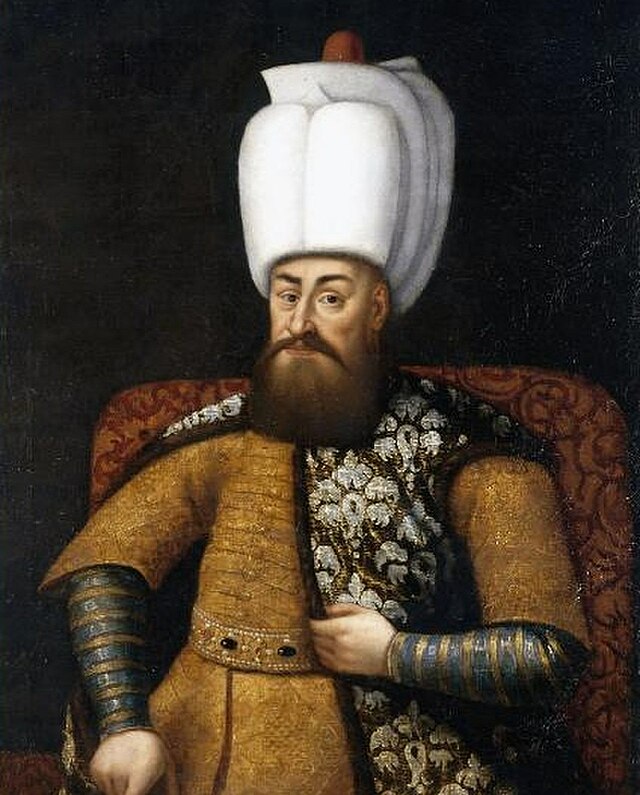
By 1545, Sultan Selim II (r. 1566-1574) and Nurbanu had wed, making her the Haseki Sultan (chief consort of an Ottoman Sultan). The pair are recorded to have had three daughters and one son: Ismihan, Gevherhan, Sah and Murad III, retrospectively. Historians have also questioned if the royal couple had, in fact, had a fourth daughter, Fatma, but no records refutes the claim or supports it.4 Other than this, we know little of the time Nurbanu spent as Haseki, only truly seeing her role take a more public stance after the death of Selim II in 1574 and the ascension of Murad III (r. 1574-1595) to the throne. To ensure that her son Murad was the successor to the crown, she hid the knowledge that Selim II had died, keeping his body on ice as she waited patiently for twelve days for Murad to return to court.5 It was by tradition that upon the Sultan’s death, all his male children became legitimate heirs to the throne and that the closest to the royal seat of power at the time of the passing would often be crowned the next Sultan, aiming to quell any internal fractioning. As Murad was away from court, it was his mother’s quick thinking that ensured his eventual ascension to the crown. After Murad III’s (image to the right) ascension to the Ottoman Empire’s throne, he quickly married Safiye Sultan in the same year. Simultaneously, Nurbanu became the validé sultan. It was customary that the viziers were the primary advisors to the crown. However, Murad’s more lazyish style of governance saw Nurbanu gain power and rule from behind the throne, seeing a clash between the roles of the vizier and the validé sultan. Viziers and intellectuals were quick to criticise the shift in power and the imbalance in gender norms. Still, their efforts amounted to little, and their opposition to female authority continued till the fall of Hatice Turhan Validé Sultan in 1683.6 During these years, Nurbanu’s seal aimed to further her power by highlighting ‘she who carried in the belly Sultan Murad for nine months.’7 Her decision to link herself with her son as opposed to her deceased husband reflected her continued influence and importance at court, and as the mother of the now-ruling Sultan, she aimed to remain ever-conscious in the political arena.
Political Alliances, Marriages and Patronage
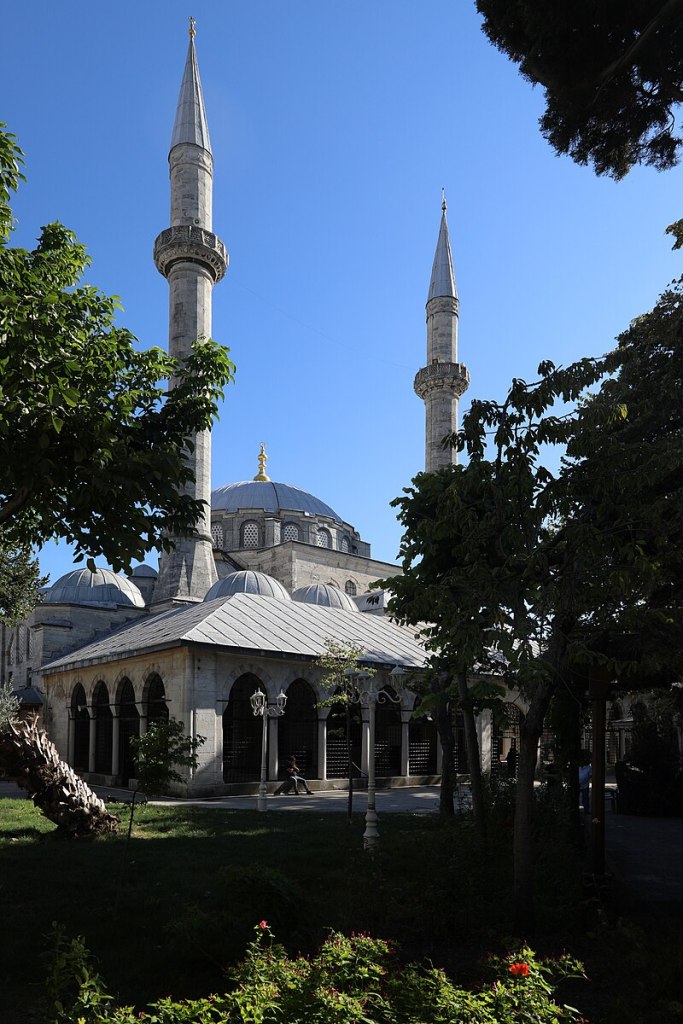
As noted earlier, Nurbanu was the daughter of two noble Venetian families, and this connection to the Venetian Republic impacted her foreign policy, often being seen as pro-Venetian. Such examples can be seen through her continued liaison with the Doge of Venice, in which a letter sent to him in December 1582 highlighted that “the lady sultana [Nurbanu] is very attached to that Seigniory and that she retains many remembrances of her homeland, and that every kind of favour surely may be expected from her Highness.’8 Equally, Nurbanu was instrumental in gaining the peace treaty of 1573, which saw the end of the three-year-long war between the Ottoman Empire and Venice.9 Similarly, she also strengthened ties with Henri III and Catherine de Medici, seeing them send gifts to one another. One example was in 1583 when Catherin de Medici ‘requested 12 Abyssinian slaves, a giraffe and some other exotic animals.’10 On the international stage, Nurbanu was once again strengthening the ties of the Ottoman Court with foreign powers. Internally, she married her three daughters off too well-established men: Ismihan to Grand Vizier Sokollu Mehmed Pasha, Gevherhan to Ottoman Admiral Piyale Pasha, and Sah to Chief Falconer Çakircibaşi Hasan Efendi.11 This act of using imperial daughters to strengthen internal alliances was not new or unique to the politics of Nurbanu, but does highlight the myriad of presidencies and avenues she employed to garner and maintain her power and authority. Finally, like Mihrimah’s waterfront Iskele and Kösem’s Çinili Mosque Complex, Nurbanu also constructed the Atik Validé Mosque Complex (image to the left). By its completion, Nurbanu had employed 121 people to recite the Quran twenty-four hours a day inside and included a fully supplied library – the first founded by a woman.12 It stood as an effigy of her goodwill, charity and patronage.
The Charitable Validé Sultan
Before her eventual death in 1583, in her final acts of charity, she freed all 150 slaves in her employment. The act of freeing one’s slaves again was not new. However, she did break from tradition, ensuring that each slave was granted a lavish sum of 1,000 gold coins.13 Additionally, she bequeathed that one-third of her total wealth would be donated to fund several of the pious foundations she had established throughout her lifetime.14 In death, Nurbanu is either remembered fondly for her charity, goodwill and her role as a diplomatic mediator or negatively as the woman who claimed too much power over the crown and started the period of ‘in violation of the ethics of proper governance.’15
Footnotes:
- Reneé N. Langlois, “Power and Authority of Royal Mothers: juxtaposing the French Queen Regent and the Ottoman Validé Sultan During the Early Modern Period,” in Living in the Ottoman Realm: Empire and Identity, 13th to 20th centuries, ed. Christine Isom-Verhaaren and Kent F. Schull (Bloomington: Indiana University Press, 2016): 98. ↩︎
- Fatima Ali and Asmat Naz, “Imperial Women: Patrons of Political Power in the Ottoman Empire (1520-1660),” Pakistan Journal of Social Sciences (PJSS) Vol. 40, No. 3 (2020): 1329. ↩︎
- Langlois, “Power and Authority of Royal Mothers,” 12. ↩︎
- Langlois, “Power and Authority of Royal Mothers,” 74 n.209. ↩︎
- Langlois, “Power and Authority of Royal Mothers,” 59. ↩︎
- Ananda Majumdar, 2023, “Role of the Royal Women in the Ottoman Kingdom: A Power Concept,” in 9th International Mardin Artuklu Scientific Researches Conference, Mardin: Turkey, January 20-22, Farabi Publishing House: 252. ↩︎
- Langlois, “Power and Authority of Royal Mothers,” 12. ↩︎
- Lucienne Thys-Şenocak, Ottoman Women Builders: The Architectural Patronage of Hadice Turhan Sultan (London: Routledge, 2016), 63-64. ↩︎
- Ali and Naz, “Imperial Women,” 1349. ↩︎
- Thys-Şenocak, Ottoman Women Builders, 58. ↩︎
- Langlois, “Power and Authority of Royal Mothers,” 73. ↩︎
- Langlois, “Power and Authority of Royal Mothers,” 98-100. ↩︎
- Langlois, “Power and Authority of Royal Mothers,” 102. ↩︎
- Langlois, “Power and Authority of Royal Mothers,” 102-103. ↩︎
- Fariba Zarinebaf, “Policy Morality, Crossing Gender and Communal Boundaries in an Age of Political Crisis and Religious Controversy,” in Living in the Ottoman Realm: Empire and Identity, 13th to 20th centuries, ed. Christine Isom-Verhaaren and Kent F. Schull (Bloomington: Indiana University Press, 2016): 98. ↩︎
For further resources, refer to the Comprehensive Bibliography.
 Asian Queenship